Tampilkan postingan dengan label law. Tampilkan semua postingan

Rabu, 23 November 2011

Lie Detection and the Jury


Much virtual and actual ink has been spilled of late about the dangers of rushing to bring brain-imaging technologies into the courtroom.  Not only neuroskeptics,[1] but also preeminent neuroscientists,[2] have urged caution when it comes to the prospect of fMRI data being admitted as trial evidence.  And brain-based lie detection, as one of the most alluring areas of imaging research, has in particular come in for a great deal of hand-wringing.


            These portents of doom are perhaps even more premature than would be the use of fMRI “polygraphy” as evidence.  Worrying now about that prospect is a bit like throwing out the bathwater before the baby has even gotten into the tub.  While it’s true that a few ill-informed judges have made a few ill-conceived decisions[3] along these lines (and those mostly in India, not the United States), the vast weight of judicial precedent, procedure, and practice makes it overwhelmingly likely that courts will move too slowly, rather than too fast, in admitting new techniques of lie detection.


            As a rule, courts are exceptionally wary of any kind of evidence that they view as usurping the function of the jury, and conventional wisdom has it that the primary function of the jury is to determine the credibility of witnesses.  Although most jurisdictions exclude polygraph evidence on the ground that it is not sufficiently reliable, in truth it is at least as reliable as much other “scientific” evidence[4] that is routinely admitted under Daubert,[5] the Supreme Court case that governs admissibility of scientific evidence in the federal courts and the majority of state jurisdictions.  But lie detection evidence speaks to witness credibility and thus it is the poster child for usurpation of the jury’s role.  While there may come a day when brain-based lie detection becomes so reliable that courts can no longer rely on Daubert to keep it out, history suggests that they will avoid that day as long as they can.


            In an article on fMRI lie detection and the role of the jury,[6] I entertained a thought experiment that asked what would happen if fMRI lie detection were to become as reliable as DNA evidence, currently considered the “gold standard” of scientific evidence.  If we could easily see whether witnesses were testifying truthfully at trial, would that make the jury obsolete?  What, I wondered, were judges so afraid of in opening the door to polygraph and other techniques of assessing witness credibility?
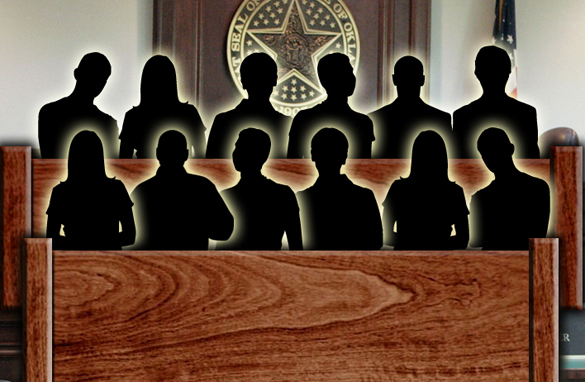


            I think the answer goes something like this:  Our current criminal justice system hides what the jury does inside a black box.  Rules of jury secrecy, combined with rules of evidence and procedure, ensure that most verdicts are unimpeachable on the facts.  In other words, so long as there is some evidence against a criminal defendant a reviewing court can (and will) assume that a guilty verdict reflects a jury’s assessment of witness credibility and not, for example, racial bias, failure to follow jury instructions on the law, or even simple mistake.  The Supreme Court has written, affirming a conviction in a case involving allegations of extensive drug and alcohol use by jurors during the trial, that “[i]t is not at all clear . . . that the jury system could survive such efforts to perfect it.”[7]  Instead, all of the evidence goes into the jury room, it gets shaken up and – abracadabra! – out comes the verdict.  If we knew that particular witnesses were lying or telling the truth, it would be much harder to accept certain verdicts without drastically reimagining what it is that we think juries are supposed to be doing.


            The recent execution of Troy Davis[8] provides a depressing example of this dynamic.  Despite the claims by advocates on either side of the debate, the evidence[9] in the case was ambiguous and murky.  The answer to the question of guilt or innocence depends wholly on which witnesses were telling the truth and which were lying, because it’s clear that someone must have been lying.  Since we can’t look into their hearts and minds, we have to rely on some fact-finder to answer this question; in our system, and usually for very good reason, that fact-finder is the jury. 


The jury may very well have gotten it wrong.  There surely was much reason – in the form of witness recantations and evidence of police pressure – to doubt whether the jury got it right.  But in the end, the “reasonable doubt” that many observers urged came from the (very reasonable) suspicion that the main witness against Troy Davis was probably lying.  The main problem is that as long as a reviewing court could hold that it was not irrational to believe this witness and to disbelieve the testimony of the defendant, there would be no real basis for overturning the conviction. 


In the end, human beings (including jurors) are not very good lie detectors.  Indeed, we do little better than a coin flip, though we tend to believe we are very skilled at detecting deception through demeanor and other clues.  Though brain imaging based lie detection is still in its infancy, it may someday be capable of supplementing our inadequate abilities in this area.  Though we should be cautious – and courts are very cautious – we should also consider the relative reliability of alternative available techniques including that lowest tech of all techniques: the unaided jury.  And we should ask ourselves whether it makes sense to enshrine the lie detection role of the jury, in all of its glorious imperfection, at the expense of considering techniques that could help the jury to fulfill this role as well as its other important roles in our system of justice.


--Julie Seaman, PhD

Associate Professor of Law, Emory University


[1] < http://neuroskeptic.blogspot.com/2009/09/fmri-gets-slap-in-face-with-dead-fish.html>
[3] http://singularityhub.com/2010/05/06/another-attempt-to-use-fmri-lie-detector-in-us-court-fails-in-brooklyn-more-on-the-way/


[5] http://www.law.cornell.edu/supct/html/92-102.ZS.html
[6] http://papers.ssrn.com/sol3/papers.cfm?abstract_id=1352648
[7]http://scholar.google.com/scholar_case?case=6212097998214052620&hl=en&as_sdt=2&as_vis=1&oi=scholarr
[8] http://www.huffingtonpost.com/2011/09/21/troy-davis-executed_n_975109.html

Minggu, 13 November 2011

International Neuroethics Society: Summary of what you (may have) missed!

Greetings from DC!  The Neuroethics Program is busy hobnobbing with some of world's most cutting-edge, interdisciplinary group of innovative thinkers at the International Neuroethics Society (INS)!


In case you didn't get the chance to attend this year, here is a brief summary of what you missed. The full list of events can be seen here and featured events from Day 1 of this year's meeting can be seen here.


This year INS hosted its annual meeting at the Carnegie Institution for Science. Day 2 of the annual INS meeting was an exciting and inspiring day featuring outstanding sessions. Each session highlighted some of the most pressing topics in the field of neuroethics.


The day opened with a panel on Neuroscience, National Security, and Society. The panel featured Jonathan Moreno, University of Pennsylania; William Casebeer, DARPA; and James Giordano, Potomac Institute for Policy Studies. Dr. Moreno is the author of the book Mind Wars. Moreno outlined the past, current, and potential uses of current neuroscience research in National Defense weaving a narrative from ingestion of cognitive-enhancing drugs, to external brain imaging, to more invasive brain-machine interface and beyond. Moreno noted that some experts had testified the science is not "ready" for such applications. However, those whose primary goal was National Defense might be more compelled by the reality that the technology is currently something a 20-year old soldier could learn to use in 20 minutes. Dr. Giordano suggested that conversations about neuroscience and defense have moved beyond whether or not we ought to weaponize neurotechnologies, but what what we should do when neurotechnologies do become weaponized. Giordano suggested that we should limit transparency about efforts to weaponize neurotechnologies to the general public and move forward with prudent communications in order to avoid inducing unwarranted mass public panic. Dr. Casebeer ended on a more optimistic front, stating that while there is peril associated with the use of neurotechnologies for national defense, by taking careful measures to protect human flourishing and autonomy, neurotechnologies hold the promise to help create a new generation of effective modes of neuro-defense.


The next session was led by self-described real life cyborg and author of World Wide Mind, Michael Chorost. Dr. Chorost has cochlear implants that allow him to hear, and in his talk he challenged us to explore how neurotechnology could improve humanity. Chorost noted that there are approximately 2 billion computers being used by 2 billion internet users, but this is no where close to the 100 billion neurons and all their synaptic connections in the human brain. Chorost envisions a future where brain transplants in otherwise healthy people might be used to make more sufficient and meaningful connections between people thereby creating a deeper awareness of those around us. Chorost views the internet as humanity's evolutionary assistant.


Image from http://www.thesocializers.com
The third session was a panel on Neuroethics and Novel Treatment in Neuropsychiatry moderated by Barbara Sahakian, Cambridge University. The panel featured Husseini Manji, Johnson and Johnson Pharmaceutical; Helen Mayberg, Emory University; and Jorge Moll, D'Or Institute for Research and Education. Dr. Manji pointed out that, according to studies by the World Health Organization, 30% of the Burden of Disease by 2015 will be attributed to neuropsychiatric disorders, an ominous figure which translates into an enormous loss of society's most important capital, its cognitive and mental capital. This outlook highlights the importance of refining our techniques for defining and diagnosing prodromal periods for psychiatric disorders such as schizophrenia, and neurodegenerative diseases such as Alzheimer's disease, as well as developing novel interventions for the the prodromal period. Helen Mayberg discussed her work using deep brain stimulation (DBS), an experimental intervention involving the surgical implantation of an electrode into the brain and battery pack in the pectoral muscle of patients, to treat intractable major depression. She describes the ethical problem of how physicians are to help patients who continue to need DBS after the pilot stages of experimentation. She also expressed ethical concerns about the evolving responsibility of the patient as their symptoms resolve. Patients may be miraculously improved while on DBS, but will need to continue having their DBS hardware maintained (i.e. battery replacement) to preserve these beneficial effects over time. Or on the flip side, how will patients disengage from the stimulator should they not want the treatment anymore? Grants for this research may cover costs to implant devices, but not to remove them. Finally, Jorge Moll discussed the implications of inferring cognitive and psychological states from neuroimaging such as for diagnosing psychopathy.


Illustration by Jeffrey Decoster
The afternoon closed with a discussion of Real Cases in Law and Neuroscience moderated by Hank Greely, Stanford University.  The panel included two attorneys Steve Greenberg and Houston Gordon, along with Russell Swerdlow, a neurologist at the University of Kansas Medical Center. Greenberg is a criminal defense lawyer who attempted to use brain images to prevent his client, an individual who has repeatedly raped and murdered young girls, from receiving the death penalty. Greenberg argues that brain imaging evidence suggests that psychopaths have brain defects, or birth defects (since they might have been born with these" brain defects") and asks how we should hold people who engage in criminal behavior accountable for their crimes, especially if they suffer essentially a birth defect. Attorney Houston Gordon has also tried to submit neuroimaging data in criminal cases, but the judge handling his case stated that the science wasn't ready. Gordon believes, however, that the science is ready, stating that neuroimaging data are the products of an unbiased computer algorithm and multiple, rigorous peer-reviewed studies. Finally, Dr. Swerdlow shared his story of a patient who had acquired pedophilia, which was due to an enormous tumor growing from the base of his skull. When the tumor was removed, the patient's tendencies toward pedophilia subsided, and his tendency for pedophilia returned when the tumor grew back. Swerdlow posed a number of questions based on this work: How hard wired is decision-making and how free is free will? And given this case as an example, are the current legal standards adequate?


If you missed this year's annual INS conference, don't despair.  INS is already planning its next conference so stay tuned and check back at neuroethicssociety.org for updates.


For those of you that attend the Society for Neuroscience meeting, please let us know if you'd like to share any work that struck a neuroethics chord in you by commenting below (We are especially interested in events we may have missed from Nov 14-16, but we welcome your notes from previous days at SFN).

Kamis, 06 Oktober 2011

Neuro-rehabilitation: A vision for a new justice system.

In the wake of Troy Davis’ execution, we’re reminded to revisit conversations about the efficacy of our current legal system and notions of justice. Often the arguments for or against capital punishment are weighted with broader moral conversations and convictions than conversations about more specific aspects of our legal system and mechanisms of social justice.


Others, like Will Campbell, say it more plainly, “Capital punishment. I just think it’s tacky.”
When we ask ourselves, “Do you believe in capital punishment?” Two simple answers might come to mind:


  1. "No, killing people is wrong." and/or


  2. "I believe in 'an eye for an eye'": a (mis)interpretation of the Abrahamic Tradition by individuals who want to justify vengeance.

Neither of these responses properly frames the real issues with capital punishment. Capital punishment is part of an antiquated and broken system that is heavily laden with issues of race, social resources and political strategy. These important issues were addressed at the recent Center for Ethics Panel discussion on Troy Davis that was reviewed here.
Some argue that capital punishment is the only way to hold truly depraved individuals accountable for the crimes they have committed. But our current justice system and its use of capital punishment, or even imprisonment, is not necessarily strictly retributive (punishment for what social crime was committed), but prospective (prevention for what social crime might ensue).


Capital punishment does not seem effective when we consider the fact that states with capital punishment do not have lower violent crime rates. In addition, the U.S. imprisons more individuals per population than any other developed country; imprisoning one-quarter of the world's prisoners. Not to mention, abysmal recidivism rates that range from 40-70%. Here is an opportunity to revisit what responsibility means and what purpose punishment should serve.


David Eagleman, Director and founder of the Initiative on Neuroscience and Law is testing what's called neuro-rehabilitation. Currently, his initial experiments involve smoking cessation via bio(neuro)-feedback methods for reducing cigarette cravings. He explains these experiments in this video (@ 23min).


His experiments center around the notion that not all people are created equal and, more specifically, not all brains are created equal. One thing to understand about equal rights is that these rights, liberties—or even the concept of freedom—presuppose having equal opportunities to access them. Consider this story:
In 2000, the man began collecting sex magazines and visiting pornographic web sites, focusing much of his attention on images of children and adolescents… When he started making subtle advances on his young stepdaughter, his wife called police. He was arrested for child molestation.

The day before he was to be sentenced to prison, the man walked into the emergency room with a headache. …An MRI revealed the tumor, and it was cut out days later.The man’s behavior began to improve...The man eventually moved back home with his wife and stepdaughter.

About a year later, the tumor partially grew back and the man started to collect pornography again. He had another operation last year, and his urges again subsided.”
This is not to compare this man with Troy Davis, but to point out another instance where our current criminal justice system is currently ill-equipped to handle such a case.


Studies have shown that 45-64% of prisoners have been diagnosed with mental illness. Given our high recidivism rates, we must wonder, if neuro-rehabilitation might be more just.
Who is to blame for this crime? Can the crime be blamed on his brain? Does this mean we don’t have free will? Whereas pedophilia might have been formerly explained as simply a moral failing and weak will, new neurotechnologies offer more to this explanation.


In retaliation to the “My brain made me do it,” a common response is, “Well, then everyone will start blaming some brain malady for their crimes. Someone has got to take responsibility.”
Realizing that brain mechanisms are at the heart of the body’s ability to execute a behavior does not change that the behavior was socially inappropriate or against the law. If you commit a crime, and engage in criminal activity, you are guilty. But, now what do we do with a convicted criminal? Does locking up the criminal change his/her brain or ensuing actions?


Here we must revisit ideas of “individual” responsibility. We say that people must be held accountable for their crimes; that they have a responsibility to society to follow the rules. What about being responsible for the communities around you? Most criminals don’t come from a high socioeconomic status, they don't come from a privileged class, and tend to not come from what we would call a healthy home. And the society into which we are born and which we defend is often predicated upon these inequalities. We are therefore each responsible for considering the conditions in our communities that facilitate criminal behavior. With such a spectrum of causes and dominant factors involved in individual life circumstances, doesn't it seem that executing or imprisoning convicted criminals is a primitive proxy for proper mental health care and social rehabilitation?


However, we must be cautious. We don’t want to use neuroscience as a new technique for justifying the disenfranchisement of those that are already marginalized (for example, by using brain imaging as a pre-screening tool for adults or even children). Current neuroimaging techniques can, at best, only describe the subject's brain at the moment of being scanned and cannot guarantee that an individual's brain activity patterns before or after the scan will behave in the same manner. By pre-screening children we run into a number of problems, but most significantly that a number of factors can shape brain development and activity. Recent data suggests that the brain continues to develop even after adolescence. In the long run, judicious application of neuro-rehabilitation may prove more productive and less cost-prohibitive than the process that leads to and includes execution or long-term incarceration.


We must also consider what kind of social norms we create when we legally enforce murder. What is the larger consequence to society when we enforce laws that equate death as the most extreme mode of punishment?


Capital punishment reinforces a notion that death is not a natural part of life; that death is something that happens to you when you do something wrong. In this way people become a vessel for delivering a cosmic justice, enforcing a higher power’s supposed infinite wisdom.

In a society where we have an anti-aging industry and one that promotes so-called transhumanism, a perspective said to see beyond the limits of the human body and in doing so creates the possibility for living forever, we have to ask how the demonization of a natural process of life can truly serve society? Death is something that the body is designed to do and something that can happen unexpectedly, and this is still natural. As Steve Jobs put it (Rest in Peace, Mr. Jobs), "Death is very likely the single best invention of life."


People should not feel punished by the procession of time and its consequent aging. Nor should they be compelled to question how they lost the favor of a higher power when they become terminally ill or when their loved ones die of cancer. The experience of death should not be abused by having it legally equated to a mode of punishment.


Nor should "medicine" be used to kill people, says Emory physician, Dr. Joel Zivot. In a recent interview, Dr. Zivot a physician and anesthesiologist at Emory questioned the role of physicians in advising or assisting to deliver the capital punishment. He is concerned that the State, by associating themselves with community-practicing physicians, attempts to make execution appear more well-regarded. Dr. Zivot goes on to claim that our justice system attempts to execute convicted criminals “humanely,” but reminds us that there is nothing humane about execution. He finds it difficult to reconcile the healing mission of medicine with the use of “medicine” for killing people. He states, “Medicine should not have any other use than medicine.” This misuse of medicine becomes even more difficult to justify in conditions where those who might benefit from these medicines actually can’t get access to those medicines due to drug shortages.


If our plan is to utilize the assistance of physicians and scientists in our justice system, and we should using every resource possible to ensure and expedite a just society, our current methods fail to do so. Perhaps, neurorehabilitation methods, used with scrupulous consideration, could be more on the mark in delivering justice.


--Karen S. Rommelfanger, PhD
Neuroethics Program, Center for Ethics


Recommended reading:
A fantastic bibilography compiled by the MacArthur Foundation Research Network on Law and Neuroscience.

Kamis, 01 September 2011

David Eagleman visiting Decatur Book Festival

Dr. David Eagleman, neuroscientist and New York Times best-selling author, will be attending AJC's Decatur Book Festival this Sunday, Sept 4 as part of his book tour on "Incognito: The Secret Lives of the Brain." Dr. Karen Rommelfanger a neuroscientist from the Center for Ethics, Neuroethics Program at Emory University will be introducing Dr. Eagleman.

Dr. Eagleman is the director of Baylor College of Medicine’s Initiative on Neuroscience and Law. The website is cleverly named "neulaw.org" reflecting the idea that neuroscience may inform new practices in law that reduce recidivism and emphasize rehabilitation--something he calls "Rational Sentencing." Essentially, he believes, "You are your brain," and by using neurorehabilitation, he promotes a "libertarian sentencing" where criminals can rehabilitate themselves.

A video of Dr. Eagleman speaking about neurolaw can be viewed below.


A video of Dr. Eagleman speaking about his book, Incognito, can be view below.
The Colbert ReportMon - Thurs 11:30pm / 10:30c
David Eagleman
www.colbertnation.com
Colbert Report Full EpisodesPolitical Humor & Satire BlogVideo Archive


Related Posts Plugin for WordPress, Blogger...